 Electronics
 Home & Kitchen
 Fashion & Shoes
 Beauty & Personal Care
 Sports & Outdoors
 Toys & Kids
 Household Essentials
Deal checking basics
How to tell a real discount from a marketing number
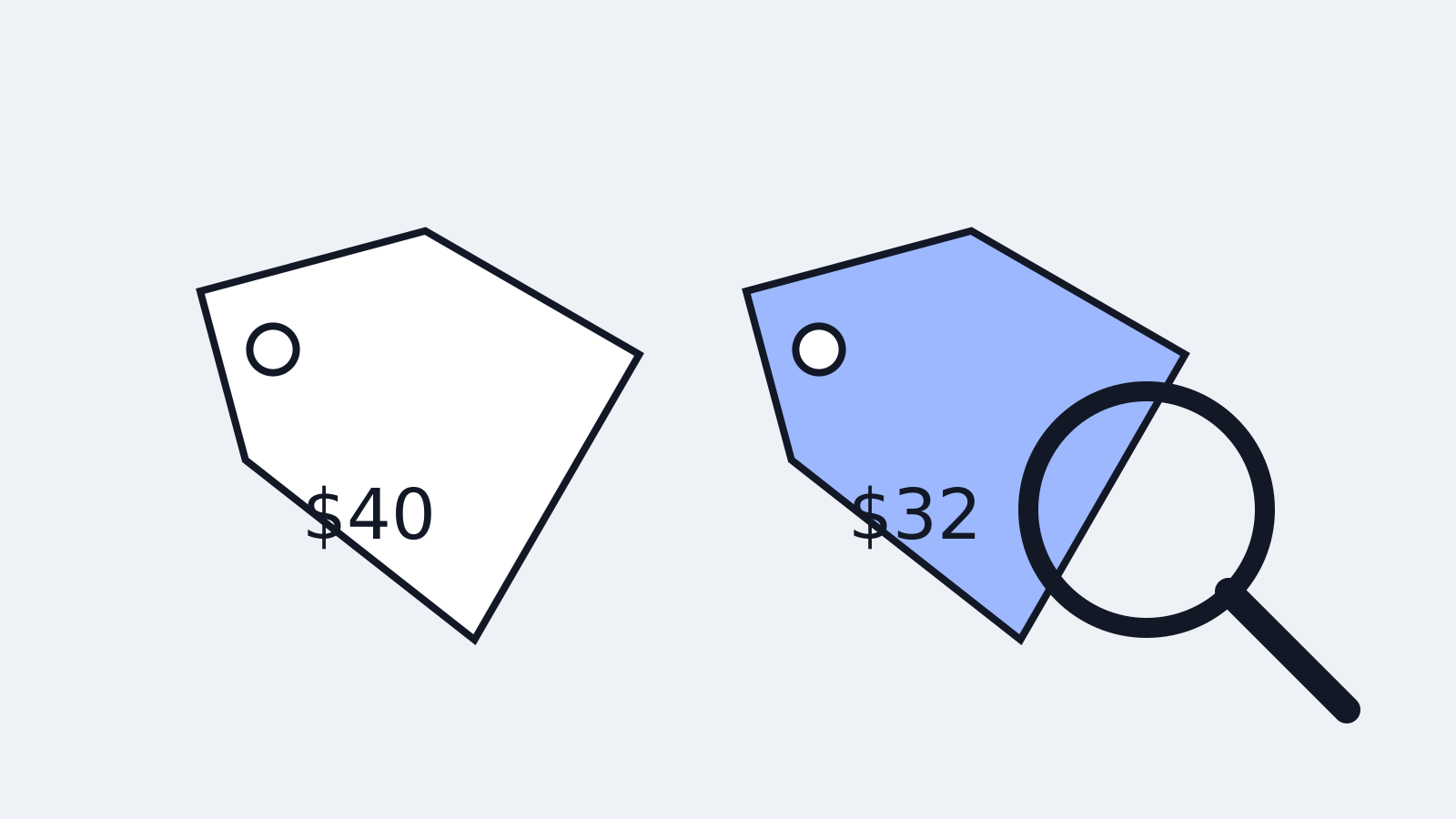
Every sale page is full of numbers. Big percentages, crossed out prices and phrases about how much you are saving. Some of those numbers reflect a genuine drop in price. Others are mostly marketing.
Learning to tell the difference is the most useful shopping skill there is. It means you buy with confidence when a deal is good, and walk away calmly when it is not. This guide explains how.
The reference price problem
A discount is always measured against something. That something is called the reference price: the price the product supposedly used to cost.
The question is where that reference price comes from. Sometimes it is the price the product sold at for months. Sometimes it is a price it was listed at only briefly. Sometimes it is a recommended retail price that almost nobody actually charged. The bigger the gap between the reference price and the real everyday price, the more impressive the discount looks, and the less it means.
That is why, on Zinvora, we only show a previous price or a percentage saving when the retailer has confirmed the previous price. Otherwise we show the current price and the date we checked it.
Track the normal price yourself
The most reliable reference price is one you noted yourself. When you start thinking about buying something, write down the price and the date. Check again a week or two later. Over time you build a sense of what the product normally costs.
You do not need anything elaborate. A note on your phone with the product name, price and date is enough. When a sale comes along, compare the sale price with your own notes.
If the sale price is clearly below the lowest price you have seen, it is probably a good deal. If it is close to what it usually costs, the saving is small, whatever the banner says.
Watch for price rises before a sale
Sometimes prices creep up in the weeks before a big sale and then drop back on the day. The sale price may then be close to the normal price, but the discount looks large compared with the temporary higher price. Tracking prices for a few weeks before a sale helps you spot this.
Compare similar products, not just one listing
A discount tells you about one product's price history. It does not tell you whether that product is good value compared with alternatives. A similar product at its everyday price may cost the same or less than a discounted one.
Use a comparison table, like the one at the bottom of every Zinvora category page, to compare products of the same type on their key specs and price.
Bundles and multipacks
Bundles can be good value, but they can also hide a weak deal. A bundle of a product plus accessories you would not use is not a saving. Work out what each part of the bundle would cost separately, and only count the parts you actually want.
Multipacks are similar. A large pack can look cheaper overall, but the price per item may be the same or higher than a smaller pack. Our unit price guide shows how to compare them.
Count the full cost
The price on the product page is not always the price you pay. Before deciding, add up:
- Shipping costs, which can wipe out a small saving.
- Accessories you need, such as a cable or batteries that are not included.
- Running costs, such as refills, filters or subscriptions.
A slightly higher price with free shipping and everything included can be the better deal.
Read the date on the price
Prices change often, especially around sale days. A deal posted last week may already be over. On Zinvora, every product shows the date its price was checked, and the price on the retailer's page when you order is always the one that applies. Check it before you decide.
Ignore the pressure signals
Timers, low stock warnings and "today only" labels are designed to stop you comparing. Real deals usually survive an hour of thinking. If a deal disappears while you check the details, there will be another one.
Price matching and adjustments
Some retailers offer price matching or price adjustments if the price drops soon after you buy. Policies vary widely, so check the retailer's terms. If you have bought something just before a sale, it can be worth asking whether an adjustment is possible.
A short checklist
- Note the normal price yourself before a sale.
- Compare the sale price with your notes, not the banner.
- Compare similar products, not just one listing.
- Break bundles and multipacks into unit prices.
- Add shipping and any extras to the total.
- Check the date the price was last checked.
Our 11.11 deals guide puts these ideas into a plan for the whole sale day, and you can browse Household Essentials for everyday items where unit prices matter most.
Why this matters
Learning to judge discounts is not about distrusting every deal. Plenty of sale prices are genuine and generous. It is about knowing the difference, so that you can act quickly when a deal is good and walk away without regret when it is not. Over a year of shopping, that habit saves far more than any single sale.